Wednesday, April 20, 2022

Remembering Donella Meadows on Earth Day


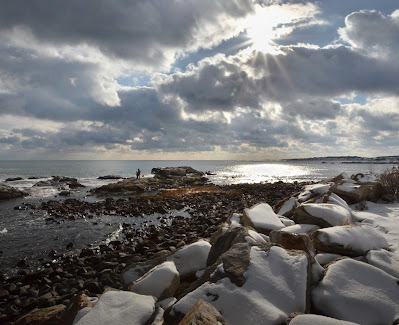
My copy of Meadows' book with Jenness Pond as backdrop


Donella Meadows is one of our own: She taught at Dartmouth for 29 years before her untimely death at 59 in 2001. Back in the day, I was honored to serve with her on the Monitor's Board of Contributors. She was the lead author of Limits to Growth, a pathbreaking book that sold over 30 million copies. In a sequel, Beyond the Limits, published in 1992, Meadows was our modern-day Paul Revere, calling out the alarm that our global industrial system had exceeded the earth's ecological limits.⁠1


By the year 2000, the 30th anniversary of the first Earth Day, Meadows had lost patience: “Earth Day is beginning to remind me of Mother’s Day, a commercial occasion upon which you buy flowers for the person who, every other day of the year, cleans up after you.”⁠2 Yet Meadows’ influence lives on: in a real sense, she is the mother of the modern degrowth movement, which spurns our obsession with endless growth in favor of ecological sustainability. 


The degrowth movement first gained momentum in the 1990s until Republicans counter-attacked, making Al Gore a laughing stock for his fierce defense of the environment while declaring in lock-step that the climate crisis was "fake news." But after the Great Recession, although the Gross National Product (GDP) began rising again, wages plateaued while inequality grew. This was further evidence to those in the degrowth movement that our current economic model was broken.


And broke, it is! 


Our current brand of capitalism premised on ever-increasing growth is a malignant cancer that, if unchecked, will be the ruin of us all. We all know that doing the same old things that don't work, over and over again, is the definition of insanity. Luckily brilliant innovators, able to think outside the box, have stepped up with practical solutions. Two of them stand out to me.


Tim Jackson, an ecological economist in England, is, perhaps, the pied piper of the degrowth movement. He sees capitalism not as fundamental but only a phase of human development, a myth that no longer works. And I think most of us, at the intuitively level, recognize the truth of what he says: “People are persuaded to spend money we don't have, on things we don't need, to create impressions that won't last, on people we don't care about.”⁠3


Jackson’s stated mission is to look beyond this myth of growth, “to dare to see beyond capitalism itself.”⁠4 His latest book, Post Growth, is a captivating, lyrical account of how things could be done better. Each chapter has a main character, a person whose life embodies a viable post-growth theme, ranging from Robert F Kennedy to Emily Dickinson.⁠5 


Another visionary is Peter Barnes, an entrepreneur who lives in Point Reyes, CA. He believes capitalism played a valuable role in human development but now must be reined in. His premise is that most of today’s wealth is co-inherited from nature and past human efforts, not individually earned. With that in mind, he proposes a new class of property rights, which he calls “universal property,” to protect our land, watersheds, and atmosphere. Instead of letting a few investors privatize the benefits, the idea is to create trusts to manage our natural resources.  The beauty of this approach is that it generates reliable revenue streams to be shared by every citizen⁠6 while at the same time protecting the environment.


These trusts exist and are spreading. Perhaps the first and most successful was created in Alaska over forty years ago when oil was discovered on the North Slope. The governor, Jay Hammond, persuaded legislators and voters to create a trust, The Alaska Permanent Fund, to invest oil revenues from oil leases for future generations. The fund has now grown to $64 billion and paid out, on average, $1,600 annually to every resident in the state.


I want to close by making amends. I am guilty of the crime confessed to by Barnes: “My generation—the generation born in the mid-twentieth century—has had a grand party.  We have consumed more resources and created more environmental destruction than all previous generations combined.  We are leaving behind one horrendous mess for our children. But we haven’t departed quite yet. We still have time to leave a legacy.⁠7


On this Earth Day, what better legacy could we leave than incorporating permanence and greater equality into our runaway economic system.

xxx


anImage_20.tiff

1 https://en.wikipedia.org/wiki/The_Limits_to_Growth

2 https://donellameadows.org/archives/earth-day-plus-thirty-as-seen-by-the-earth/

3 Tim Jackson, Prosperity without Growth: Economics for a Finite Planet

4 Jackson, Tim. Post Growth (pp. 32-33). Wiley. Kindle Edition.

5 https://earthbound.report/2021/03/29/book-review-post-growth-by-tim-jackson/

6 https://podcasts.apple.com/us/podcast/frontiers-of-commoning-with-david-bollier/id1501085005?i=1000537233939

7 https://peter-barnes.org/decades/2000s/schumacher-lecture-capitalism-the-commons-and-divine-right/


Tuesday, April 12, 2022

I got war on the brain


Everywhere on the media and in my dreams, I see corpses “carpeted through the streets”⁠1 and neighborhoods reduced to rubble. It takes me back to Vietnam. I limit what I view, but some veterans cannot stop watching. Is it an unconscious attempt by those with Posttraumatic Stress Disorder (PTSD) to make sense of what happened to them in combat?


I know my own life has been soaked in war since I was little. I remember walking with my family through the Harvey Lake Cemetery in Northwood on Memorial Day to watch my father’s  WWII buddies, still mainly young men in in their twenties, fire final salutes to their dead comrades over the lake, scaring birds out of the trees and causing babies to cry.  


Before I was in my 20s, I found myself in my own war in Vietnam. Afterward, I co-founded the Merrimack Valley Chapter of Veterans For Peace (VFP) to educate the public about the costs of war, particularly immoral wars of choice like Vietnam. Our slogan was "Never Again," which now sounds so pathetically naive.


How can any of us not be traumatized from the unspeakable violence force-fed into our psyches around the clock? It's not just from this war in Ukraine, but the cumulative effect, starting from being held hostage to reliving 9/11 endlessly, to watching the nightly carnage of countless conflicts around the world; to bearing witness to what seems like an endless loop of our kids being gunned down in their schools by other kids. One could make a good case that we now all have PTSD.


And what do folks with PTSD do? 


They obsessively attempt to control their lives to avoid further trauma. It's an unconscious reaction, often irrational. Look at us in N.H., one of the safest places on earth. Yet, because of PTSD, we live in fear, afraid of the bogeyman, the dreaded Other who doesn't really exist: Like the feverish hallucination that democrats are satanic pedophiles who eat babies, that our teachers are indoctrinating kids to feel guilty about being white, or that brown-skinned immigrants, fleeing death squads, are drug dealers and serial rapists.


And what is the most common American response to these bogie men of our dreams? 


Buy more guns – lots of them. According to the 2018 “Small Arms Survey,” U.S. civilians alone account for 46 percent of the worldwide total of civilian-held firearms, which breaks down to "120.5 firearms for every 100 residents."⁠2


Today, most of us buy guns not for hunting but for protection against that evil Other. Toward that end, we've repealed regulations prohibiting military-stye assault rifles with big clips; we've loosened laws to allow practically anyone to carry loaded weapons openly; and we've passed new laws in many states, allowing the gun owner to "stand your ground."  At the crux of these ‘shoot first” laws –like reliving the wild west – is the notion that lethal force should be used on first instinct, instead of saving it as a last resort.⁠3


And what is the predictable result? 


More shootings, more violence, more killing. Around and around we go. Worse yet, this same insanity is happening on the national level. Just look at Ukraine, fighting for its very existence against the Russian Bear. Of course, we have to support them: Arm them, we must. But that doesn’t mean raising the defense budget.


That would be the same mistake individuals make by buying more weapons. Yet, both Republicans and Democrats are guilty, bidding against each other to increase the Pentagon budget, even though, by the most conservative estimates, we already spend four times more on arms than Russia.⁠4


Like Americans buying more guns, spending more money on the military does not supply security, only more death. The honest solution is to give Ukraine whatever they need to defend their country while, at the same time, reducing our overall defense budget. We can start by scrapping the  Pentagon's program to build a new generation of nuclear weapons, projected to cost two trillion dollars.


We already possess thousands of nuclear weapons we don't need. New research shows the "pragmatic limit" of atomic weapons any country needs is only 100. That's because any nation, unleashing more than that, would create a nuclear winter blowback, destroying their society as well.⁠5 


It's time to commit America for mandatory therapy to address our irrational behavior. Our survival depends upon it.

xxx


anImage_41.tiff

1 Associated Press reported in https://concordmonitor-nh.newsmemory.com

2 https://en.wikipedia.org/wiki/Small_Arms_Survey

3 https://www.bradyunited.org/fact-sheets/what-are-stand-your-ground-laws

4 https://warontherocks.com/2019/12/why-russian-military-expenditure-is-much-higher-than-commonly-understood-as-is-chinas/

5 https://www.mtu.edu/news/2018/06/more-harm-than-good-assessing-the-nuclear-arsenal-tipping-point.html

Wednesday, April 6, 2022

The FSP and the tangled web from which it sprung


Copied from: https://en.wikipedia.org/wiki/Free_State_Project


The Free State Project (FSP) has been recently in the news for what it accomplished at the last Croydon town meeting, taking down its first public school system by reducing the school budget by more than 50%. The FSP is, of course, the libertarian outfit that voted 15 years ago to come to NH to take us over by abolishing most governmental services.


As Michael Ward, a local author, has written: The FSP “reject the concept of ‘the common good’ as being a socialist principle. In their worldview, you are only responsible for your part of the planet. You have no obligation to pay for anything that you don't directly use or control. In short they embody the state motto, “Live Free or Die” on steroids.”⁠1


The last column I wrote for the Monitor was about my shipboard life in the ‘brown water navy’ in Vietnam. It was about how a diverse cross-section of Americans were able to bridge our differences to come together as close-knit group. Just as my ship was a vehicle for forming community in Vietnam, our schools are a primary vehicle for creating community in NH.


The FSP knows what it is doing: Demolishing our public schools is the surest way to dismantle our community. Supporting our schools is one of the few times we come together, climbing out of our specialized silos for the sake of our children's future. That is how we come together with other parents, that's how the community comes together by rooting for local school sports, and that's how children come together to become lifelong friends,  not enemies, no matter what their differences.


According to their website, over 6000 FSP members have already moved here, and 45 now hold public office. Interestingly enough, FSP specifically listed, as a reason for choosing NH, our state motto, "Live Free or Die.” 


Too many folks, including the FSP, have been hornswoggled into believing our motto represents the essence of who we are. But that would be wrong. Essentially the FSP was lured here under false presences. 


The truth is that our motto is only a recent afterthought, not adopted until 1945. Before that, we got by perfectly fine without one. When we finally decided to adopt a motto, it was done with the same sense of urgency we brought to bear when we picked the purple finch as our official state bird.


There were several candidates: The "Live Free or Die" entry came from a letter written by General John Stark, revered as our own NH-born war hero who fought the British in our American Revolution. His meaning was crystal clear in the same sense Volodymyr Zelenskyy, the Ukrainian president, proclaims it today to stiffen his country's spine as it fights for its life against a formidable invader.


It’s not a statement about politics, but war.


NH's motto wouldn't be newsworthy in any state in times of war. Likewise, NH was similar to her neighbors in times of peace: Our joint survival depended on the community working together for the common good by building roads, schools, and libraries. Sometimes NH was even ahead of the pack: Peterborough founded the first public library in 1833, 19 years before Boston established theirs.


After our motto was adopted, it was pretty much ignored until Meldrim Thompson became governor in 1972. Remember him: he was the governor who wanted to arm the NH National Guard with nuclear weapons. Thompson won by pledging to ax any broad-based tax. Backed by the fierce advocacy of William Loeb, the arch-conservative publisher of the Manchester Union-Leader, this pledge has become "a central part of New Hampshire's political lexicon"⁠2 by merging it with the feel-good patriotism of live-free-or-die.  


Combining our state motto with the pledge has created a formidable juggernaut combining two disparate groups into a grand alliance: the business community, who want less regulation, and working people who don’t want to be told what to do. Since then, no governor has been elected  without  “taking the pledge.”


Therein lies the story of NH's tangled politics, starting with the extremists hijacking our war hero's words and making them into a political cudgel. And then weaponizing "The Pledge" by making it our patriotic duty – like pledging allegiance to the flag –  to tax working folks four times more than the rich. All of which was catnip to the FSP. 

xxx


anImage_35.tiff

1 https://www.seacoastonline.com/story/opinion/columns/guest/2022/03/26/commentary-free-state-seeks-dismantle-nh-government-new-hampshire/7159566001/

2 https://www.pewtrusts.org/en/research-and-analysis/blogs/stateline/2012/10/25/tax-pledge-permeates-new-hampshire-politics

Wednesday, March 23, 2022

One for All, All for One

Offloading my ship by helocopter due to enemy ground fire
CC Jean Stimmell cc 1967

I was mesmerized by a scene I saw on TV at the beginning of the Russian invasion of Ukraine: A group of neighbors with rifles guarding a suburban street leading into Kyiv against approaching tanks, their faces illuminated by fires they had lit in trashcans to keep warm, fearless and immovable, belting out in unison the Ukrainian National Anthem.


When everything is on the line, we forget our differences and come together as one.  Of course, we do: as social animals, it has been bred into us. That’s why we have survived as a species.


Although much less dire, I once was in a similar situation in the Navy during the Vietnam War. Our ship shuttled tanks, supplies, and sometimes troops along the coast and up the rivers of Vietnam. Occasionally, we had a significant crew turnover when guys rotated home; on one such occasion, almost a quarter of the crew was new. 


On our return trip from the Philippines, all hell broke loose in a crude kind of diversity training, representing as we did, a cross-section of the nation: East coast, highly educated, college dropouts and midwestern kids who hadn’t finished high school; hip city slickers and country folks right off the farm; We had Native American, Hispanic, and black sailors, along with staunch segregationists from the south.


It started with some pushing and shoving, harsh words, and a few fistfights, but, after day after day at sea, a certain equilibrium was achieved. We had other things on our minds. Sometimes, we had to be offloaded by helicopter because of enemy ground fire; once, shuttling around the Mekong Delta, the crew didn’t set foot on dry land for three months while garbage mounted up in the 120-degree heat, and we were reduced to saltwater showers.


We were a scruffy lot but did our jobs like well-oiled machines. If we got stuck on a sand bar in a river, we lowered landing boats to push us free. And it was up to us to defend our own perimeter when offloading cargo solo at desolate spots in the jungle. 


On November 1, 1968, shortly after I had returned to civilian life, Vietcong divers partially sunk our ship on the My Tho River. According to the official records, the 25 killed in action in the mining of Westchester County were “the U.S. Navy’s greatest single-incident combat loss of life during the entire Vietnam War.”⁠1 The death toll could have been much worse! But reacting quickly, amidst the screams of the injured in pitch-black darkness, crew rose to the occasion, turning valves to pump water into ballast tanks, preventing the ship from capsizing.


Staying alive in Vietnam was a mighty unifying force, putting on hold the cultural war raging back home in America. Today we are at war again – and I’m not talking about Russia, or our cultural polarization, which, while severe, is only a symptom of a deeper problem: the autocracy that rules our nation.  


Like Russia, we have our own super-rich oligarchs: At the top of the list, according to Forbes, are Elon Musk, Jeff Bezos, and Bill Gates, who now own more wealth than half of our population.⁠2 Worse yet “ProPublica found [in most] recent years, Musk, Bezos, and many of their fellow billionaires paid zero federal income taxes even as their fortunes soared.”⁠3


Like oligarchs everywhere, their unlimited resources enable them to tip elections in their favor. Conversely, as confirmed by Pew research, the average citizen has virtually no influence. Dark money and the fossil fuel industry spare no expense in shifting the blame away from themselves for causing our nation’s massive inequality – and the existential dangers of climate change – by spreading propaganda, distrust, and polarization.


These corporate titans now pit populists against progressives in the same manner that plantation owners pitted poor whites against blacks – while the elite merrily made money off both groups. Today the war we must fight is against this rampant inequality and looming environmental disaster.


That's the new war we must fight. Like the Ukrainians are doing, we must stand shoulder to shoulder to stop it. Our families and loved ones are on the line, along with all our fellow inhabitants of Space Ship Earth.

xxx


anImage_38.tiff

1 https://www.historynet.com/uss-westchester-county-attacked-during-the-vietnam-war/

2 https://en.wikipedia.org/wiki/List_of_wealthiest_Americans_by_net_worth⁠1

3 https://www.thenation.com/article/economy/pandemic-rich-richer/?utm_source=Sailthru&utm_medium=email&utm_campaign=Daily%203.22.2022&utm_term=daily

Tuesday, March 15, 2022

Seeking New Prophets: Bob Dylan and Volodymyr Zelenskyy?


The Beginning or the End?


I believe in science and the scientific method, testing each hypothesis to see if it is true. And, most important, as more evidence accumulates, changing the theory to stay in synch. There is no doubt the phenomena science studies, it knows well. But for the rest, it knows not.


That's why I'm always open to a more intuitive and more inclusive source of knowledge, the kind written about by Michael Mead: He is a scholar of mythology who has an uncanny ability to tap into ancestral sources of wisdom and connect them to the stories we are living  today.⁠1


For the same reason, I've always had a soft spot for Carl Jung, one of the most renowned psychologists of the 20th century. He went beyond where traditional science was willing to go. He believed in synchronicity, that everything happens for a reason; and he thought that we have a collective unconscious, a more profound way of knowing that humanity holds in common. Furthermore, he thought this collective unconscious could manifest itself in certain individuals. 


It happened to Jung himself when he fell ill in 1913. He thought he was going insane because of his reoccurring, bloody visions of worldwide carnage and destruction. Soon after, World War I erupted out of nowhere with unimaginable bloodshed – over 22 million lost their lives. Jung no longer questioned his sanity, realizing his dreams and visions were a premonition of war.


Well, maybe, you say, that was just coincidence or the rambling of a deluded, old, pointy-headed intellectual. Okay. Then let's take another example: Bob Dylan, son of a furniture store owner from a gritty mining town of Hibbing, MN, a nomadic waif who hitchhiked to NYC at age 20 to become the voice of his generation, the oracle who could express what was blowing in the wind, something we all felt but tongue-tied to say. 


One could make the case that Dylan's words were another manifestation of Jung's collective unconscious. His powers defied science and logic. From the beginning, he played only what he wanted to, not necessarily what the audience called for. And he was superbly gifted: the magnificence of his lyrical prose earned him the Nobel prize in 2016 "for his unique ability to prove that lyrics can go deeper than simple rhymes: they can become works of literature."⁠2


His talent came from a source somewhere beyond himself. In an interview on 60 minutes, he said his songs flowed from a mysterious "wellspring of creativity." He took no credit for writing his lyrics, saying they magically came to him. To me, his songs appear to be a manifestation of our collective unconscious, the wisdom we hold in common, the wellspring of our humanity. 


His songs cut through the clutter of evening news body counts and talking head blather to look straight into the face of the existential crises we face. The perils of the past loom larger each day. One song, in particular, "A Hard Rain's A-Gonna Fall," could not be more topical. Dylan wrote it during the Cuban Missile Crisis when we feared our world was coming to an end.


“And what'll you do now, my blue-eyed son?

And what'll you do now, my darling young one?

I'm a-goin' back out 'fore the rain starts a-fallin'

I'll walk to the depths of the deepest dark forest

Where the people are many and their hands are all empty

Where the pellets of poison are flooding their waters

Where the home in the valley meets the damp dirty prison

And the executioner's face is always well hidden

Where hunger is ugly, where souls are forgotten

Where black is the color, where none is the number

And I'll tell and speak it and think it and breathe it

And reflect from the mountain so all souls can see it

And I'll stand on the ocean until I start sinkin'

But I'll know my song well before I start singin'

And it's a hard, it's a hard, it's a hard, and it's a hard

It's a hard rain's a-gonna fall”⁠3


Scientific equations and high-tech algorithms can't solve the enormity of our problems. What is needed is access to the deeper knowledge as expressed by Dylan and mythology in general, described so well in a recent review of Michael Mead's latest book:


“As nature rattles and culture unravels, mythic imagination tries to return to the world, for endings and beginnings are particularly mythic. When "the End" seems near, how people imagine the world becomes more important; how people imagine humanity becomes of the utmost importance. Meade shows how "myth makes meaning" and helps a person find the meaningful path through life…


“When it appears that there's no time left, it isn't time that people need, but the touch of the eternal. While explaining how culture renews itself from the dreams of youth and the visions of elders, Meade introduces the concept of becoming ancient again by connecting to the eternal youth and the old soul within.”⁠4


Remember what Dylan predicted, “For the loser now will be later to win for the times they are a-changin’” We must honor the deep wisdom of our new prophets like the folksinger from Hibbing and the comedian from Ukraine. 

xxx


anImage_29.tiff

1 https://www.mosaicvoices.org/about

2 https://www.askqotd.com/bob-dylan/

3 https://www.azlyrics.com/lyrics/bobdylan/ahardrainsagonnafall.html

4 https://www.goodreads.com/book/show/4916225-the-world-behind-the-world


Tuesday, March 8, 2022

A Rant: Finding our Way Home


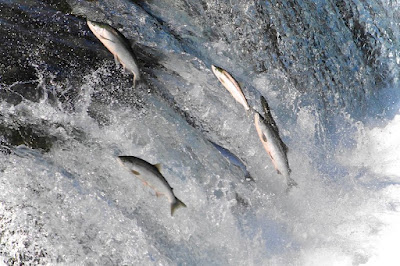
Salmon Returning Home
By Katmai NPS CC 2.0 license


I’ve written about how wonderful the Hope Lodge is, a compassionate and  revitalizing pitstop while enduring the barren desert of radiation and toxic chemicals. But still, it was not home. As a result, I’m beginning to feel like a plant marooned in a plastic pot, uprooted from my native soil. I felt that way in Vietnam, waiting my turn to come home. And I feel that way today. 


But this time around, I have a better idea of where this alienation is coming from, both in my own life and in the societal turmoil raging around us today. We are rapidly losing a foundational component of who we are as humans: our sense of place.


We have long been losing our sense of place, forced to move frequently, like nomads, to satisfy the demands of modern society; we are programmed to work hard all week so we can binge on the weekend. Then on Monday, we begin all over again, like Sisyphus repeatedly pushing that boulder up the mountain for eternity. 


Nevertheless, we have persevered: it’s the American way, and we are good at it. That is until the boom fell.


First Covid-19 erupted out of nowhere, throwing a hand grenade into the orderly routine of our lives, locking us claustrophobically in our homes, away from the comfort and camaraderie of friends. Like a giant experiment, it has unhinged us. While the rich cavorted in nature, we atrophied in the stale air of our rooms. Meanwhile, social media bombarded us with tales of doom and gloom from an endless barrage of fake news. 


Solitary confinement is how you break prisoners. And that’s what Covid did to us. Over time, we became delusional, incapable of trusting ourselves because the world has gotten too complex to figure out on our own. And we lost trust in experts because they talk in a thousand different tongues – which seem to change by the week. Meanwhile, we’re besieged by conspiracy theories – some even by our former president – that may sound at first glance as believable as anything else.


What a can of worms!


 We used to be empowered because we knew how to play this game of life. But now the rules have changed: we no longer are the exceptional people, the most favored of all nations, the king of the hill. Instead, we feel climate change’s hot breath burning our backsides while Covid mows us down. Polarization has caused our neighbors to become our enemy. And now, a significant war, erupting like a sulfurous volcano, threatens to engulf all of Europe, if not the world.


Explaining this malaise, naysayers have pronounced that the old game of democracy is dead. They complain that the Big Truths honoring morality and fair play are holding us back. In its place, these malcontents are busy devising new games with simple, easy-to-follow rules. I’m talking about folks like our neighbors who have fallen down the rabbit hole of alternative realities like QAnon.


My ravings are not just that of a patient, addled by too much radiation: it’s the conclusion of the philosopher and game theorist, C. Thi Nguyá»…n, who in his recent book, “Games, Agency As Art,”⁠1 came up with this notion. He writes that the lure of conspiracy theories, like QAnon or the Flat-Earth Society, is about putting yourself in charge of your own little world, “in which you can manage everything, in which you can understand everything.” 


His research reveals that people hooked on conspiracy theories “say over and over again” how it has empowered them. And the reason, he says, “is the conspiracy theories fit inside your head. They’re the right size for you just like games are the right size for you to take some kind of action.”⁠2 


These conspiracies, which conjure up alternative realities where everything is relative, anything is permissible, and morality doesn’t exist, have had a hypnotic appeal to extremists. That is, until recently, when objective reality reasserted itself: Overnight, Putin’s barbaric and brutal invasion of Ukraine popped the bubble of all these pie-in-the-sky fantasies.


At last, old virtues, like human dignity and democracy, are back in vogue. Once again, we are witnessing how a sense of place is worth fighting for – and even dying for –  as Ukrainians stream back to their spiritual homeland from around the globe to take on Russian tanks with crowbars and Molotov cocktails. 


Regaining our sense of place is a vital component in rebuilding trust in each other, necessary to building a better world. Otherwise, we are like salmon swimming in circles biting each other in frustration because we have forgotten the way home

.xxx


anImage_158.tiff

1 https://www.nytimes.com/2022/02/25/opinion/ezra-klein-podcast-c-thi-nguyen.html?showTranscript=1

2 ibid.


Wednesday, February 23, 2022

E. B. White on My Mind


"E B White quote" by Kathleen Tyler Conklin is licensed under CC BY 2.0


I sometimes berate myself for the amount of time I spend trying to write. I have no trouble coming up with an idea, but as I write, another thought pops up, and then another, until pretty soon, I've composed a jumbled and inarticulate mess. It takes a lot of time and many revisions to distill the piece down into something smooth and easy to read – that actually says what I want to say.


Recently, I had an insight, after observing what pleasure older folks get spending hours assembling jigsaw puzzles at the medical residence where I am staying. They told me it was relaxing, making time fly by. That struck a nerve with me because that's precisely what writing does for me.   


Rather than berating myself for wasting so much time, I should be rejoicing that I have such an all-consuming passion  - even if all I ever did with my writing was delete it when I finished, like puzzle solvers do when the game is over, putting the pieces back in the box.


But more than that, writing helps to organize my thoughts. In the process of rewriting, I am able to distill vague thoughts and feelings into clear articulations, previously only indistinct whispers, like the sound of the sea lapping up against the beach. I’ve always considered my writing a personal pursuit. But E. B.White, my favorite essayist, believed writers have a responsibility to society.


White is best known for writing iconic children’s books like “Charlotte’s Web.” But he was, first and foremost,  a celebrated writer for adults, considered one of the finest essayists of the 20th century. The Christian Science Monitor praised him for crafting personal essays that, more than three decades after his passing, endure as exemplars of the form.”


Here's a quote from one of my favorites, "One Man's Meat," a collection of his essays about life at his beloved saltwater farm in rural Maine, where he resided a good part of the year.


“Old stone walls ran into the woods, and now and then there would be an empty barn as a ghostly landmark. The night grew frosty and the ground underfoot was slippery with rime. The bare birches wore the stars on their fingers, and the world rolled seductively, a dark symphony of brooding groves and plains.”⁠1 


But I digress. As I started to say, writing was more than a craft for White; it was an obligation, which he described this way: while “a writer should concern himself with whatever absorbs his fancy…I do feel a responsibility to society because…a writer has the duty to be good, not lousy; true, not false; lively, not dull; accurate, not full of error. He should tend to lift people up, not lower them down. Writers do not merely reflect and interpret life, they inform and shape life.”⁠2


He felt “a writer must reflect and interpret his society… [providing] inspiration and guidance and challenge.” He was a sage ahead of his times, who recognized, over 50 years ago, the rise of a disturbing trend in social media. And he didn’t like it: "Much writing today strikes me as deprecating, destructive, and angry.”⁠3  


I appreciate E. B. White in many ways: He was an optimist: “All that I hope to say in books, all that I ever hope to say, is that I love the world.” He was kind: “By helping you, perhaps I was trying to lift up my life a trifle. Heaven knows anyone’s life can stand a little of that.” (From Charlotte’s Web). He was a philosopher: “Life’s meaning has always eluded me and I guess it always will. But I love it just the same.”⁠4 


And most of all, he understood my muddled method of writing: “A great deal of writing is not "plotted"—most of my essays have no plot structure, they are a ramble in the woods, or a ramble in the basement of my mind.”⁠5 

xxx


anImage_110.tiff

1 One Man's Meat by E.B. White

2 https://www.themarginalian.org/2012/04/17/e-b-white-paris-review-interview/

3 Ibid.

4 https://www.kent-teach.com/Blog/post/2015/07/11/15-wonderful-quotes-from-e-b-white.aspx

5 https://www.thoughtco.com/writers-on-writing-e-b-white-1692831